
Somalia
Since 2007, our longest partnership, Bancroft Global Development, helps Somalia with medical care where soldiers and civilians meet.
In Somalia, newly liberated towns often have no clinic, no pharmacy and no doctor.
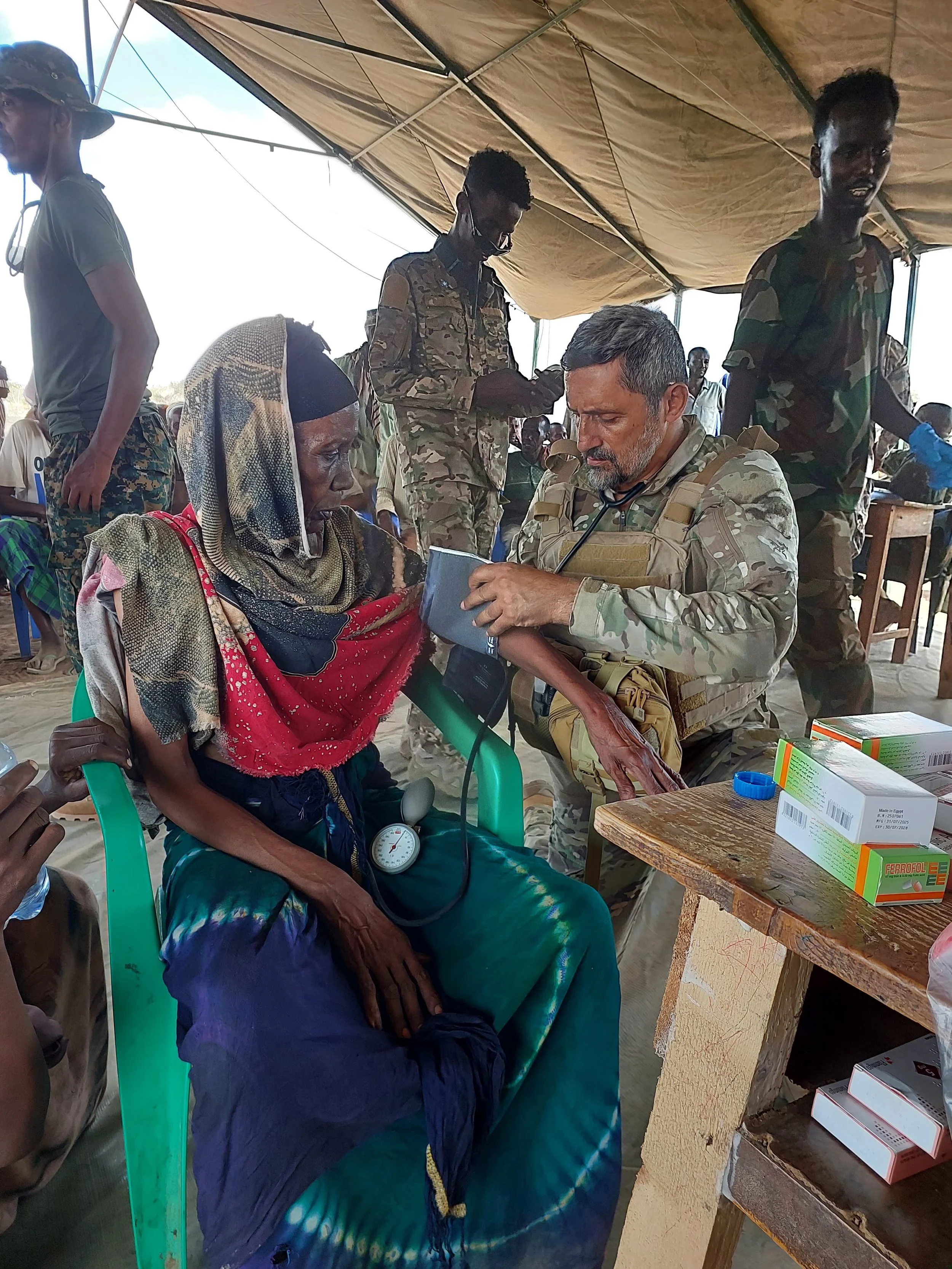
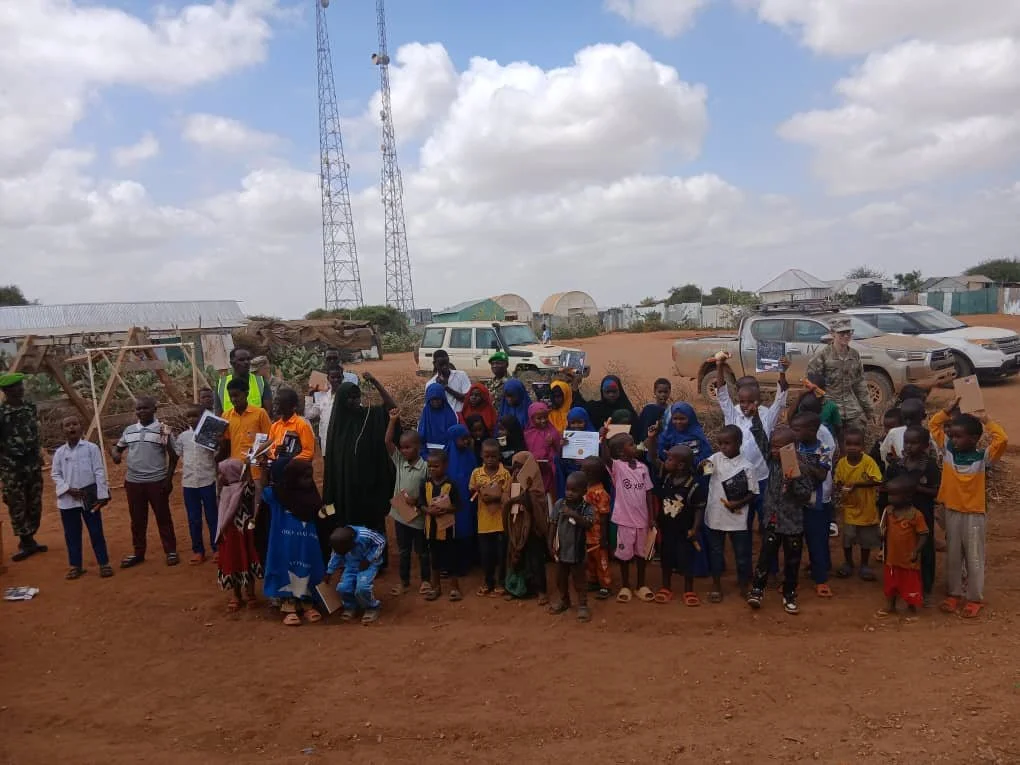
Civil-military cooperation (CIMIC) is how care reaches them: Bancroft medics work alongside African Union (AUSSOM) and Somali army (Danab) units to treat civilians in their hospitals and in outreach events.
The AUSSOM Level I Hospital in Baledogle is the only provider of care for a district of over 300,000 people. It reported a more than 95% rise in fungal infections and a more than 127% rise in severe gastrointestinal disorders this year.
Our recent impact
2025
5,424 civilians treated in AUSSOM hospitals and 1,495 more in nine outreach in liberated towns.
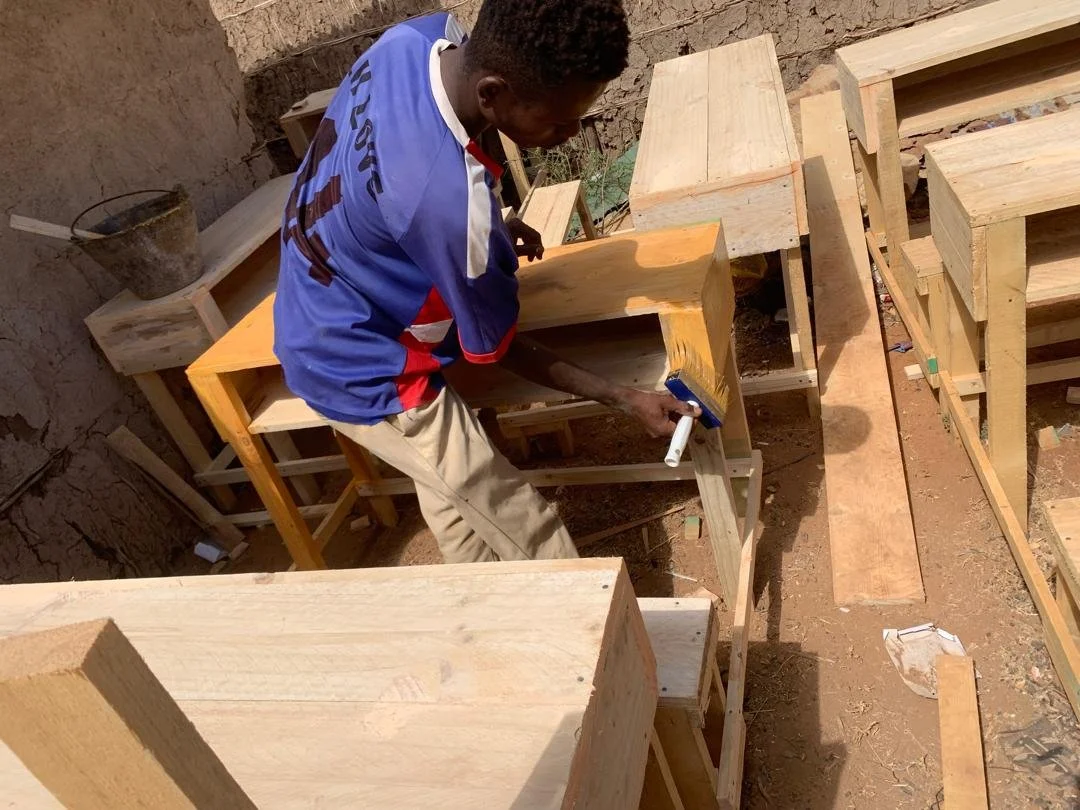
Solar power, school supplies and English lessons for the SNA Village School in Baledogle, where most of the children are orphans of fallen Danab soldiers.

2026 so far
A multiple of medicines are sent to the hospital therefore, an additional 2,038 civilians were treated.
208 people (80 women, 75 men, 53 children) treated and fed in Mubarak, a town that was liberated this spring and hit by drought.
75 patients, including 38 children and 8 pregnant women, seen at the first Somalia’s rape crisis centre.
Desks, chairs, and textbooks for 224 children in the new SNA Village School Building.
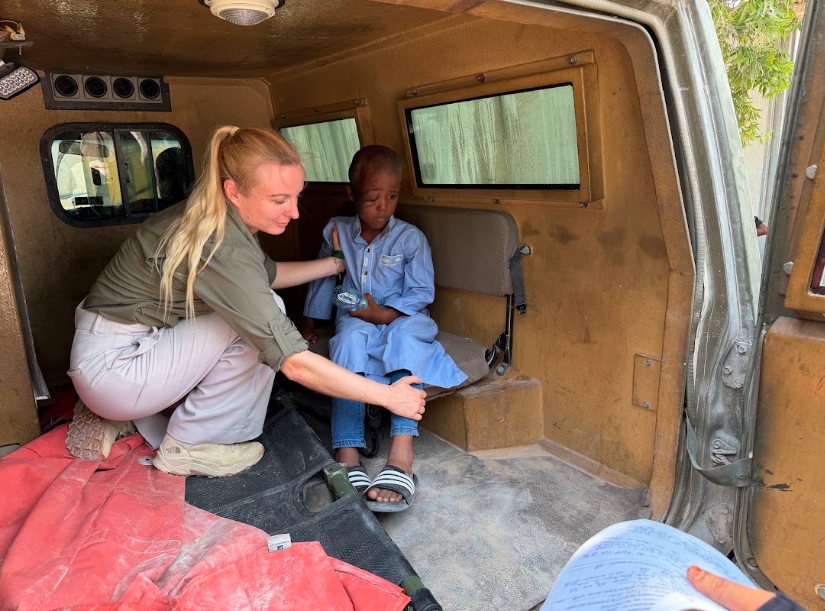
In April, a mother brought her 7-year-old son to the African Union hospital in Mogadishu. A swelling had been growing on one side of his face for four years. It had closed one eye and was reaching his mouth. She had saved $5 for the trip, and the hospital is the only place in the city with free consultations. Bancroft's doctors needed a CT scan to know what they were facing. Give to the World paid for it, $236. A team of Bancroft doctors, Somali specialists and the U.S. Forward Surgical Team reviewed the scan together and set his care plan.
A story shared from the field
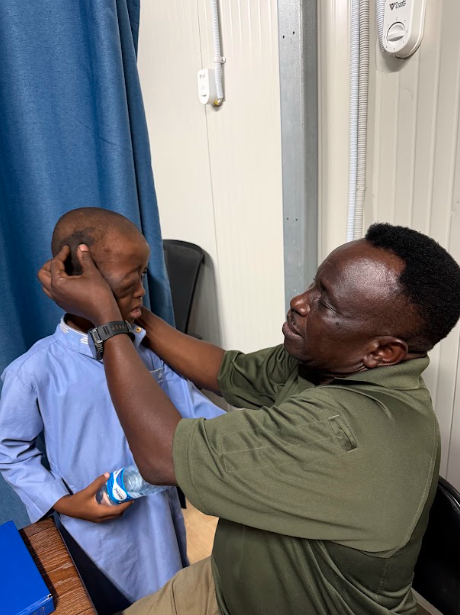
Diagnostic care, such as CT scans, for civilians who cannot pay
Sanitary pads for women in underserved communities
One medical outreach event in a newly liberated town
Textbooks, sports equipment and stationery for two schools and an orphanage
Medicines and supplies for the AUSSOM Level I and Level II hospitals for 2027
Five outreach events across 2027
What your gift can help with future projects in 2027 for Somalia
The Philippines
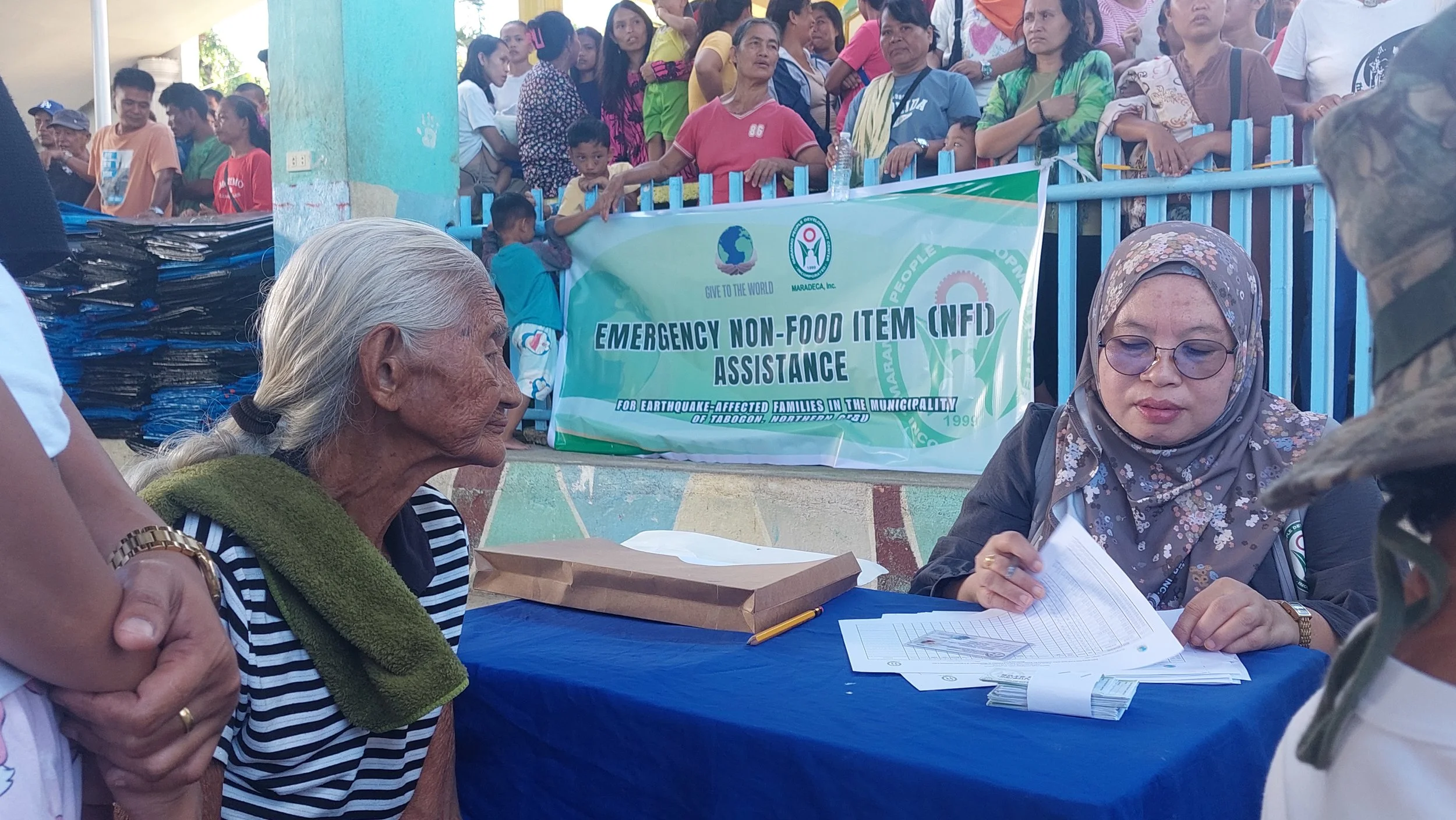
Our partner, MARADECA, since 2021, helps from earthquake relief to families growing their own food in the Philippines.
Mindanao and Cebu, two towns in the Philippines, were hit by disaster after disaster in 2025: a 6.9 magnitude earthquake in Northern Cebu, then Typhoon Tino, while families were displaced by the 2024 floods were still replanting.
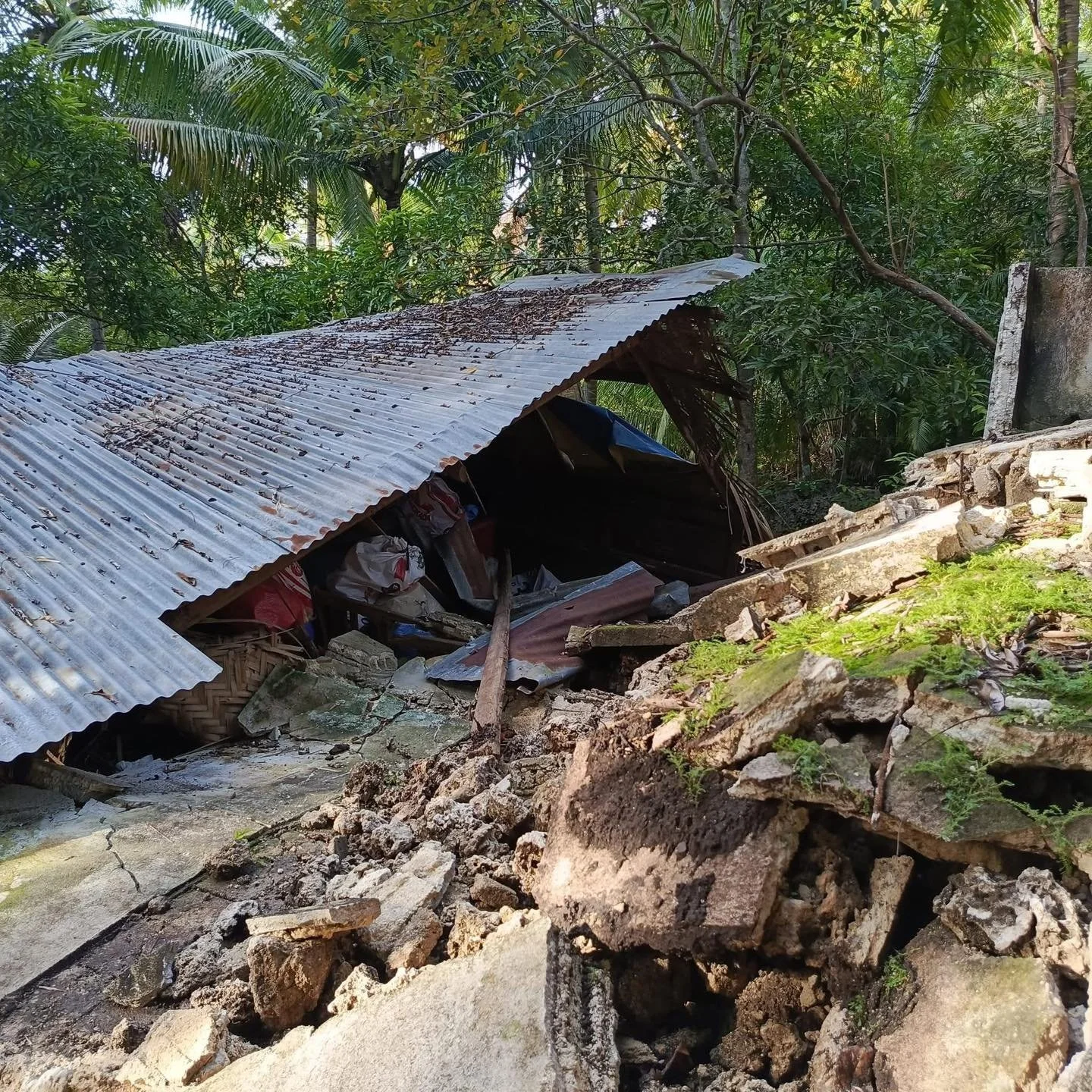
In June 2026, an earthquake struck Malapatan and Alabel in Sarangani. Many affected households are led by women and elders.
Our partner, MARADECA, monitors the situation in Sarangani and it shows that needs have moved from emergency relief to recovery: cash, livelihoods, shelter repair, water and sanitation and health services.
Our recent impact
491 families were reached for flood recovery.
360 families were reached for earthquake relief.
An increase in food relief after Cyclone Rai and 500 school kits after Typhoon Paeng.
A story shared from the field
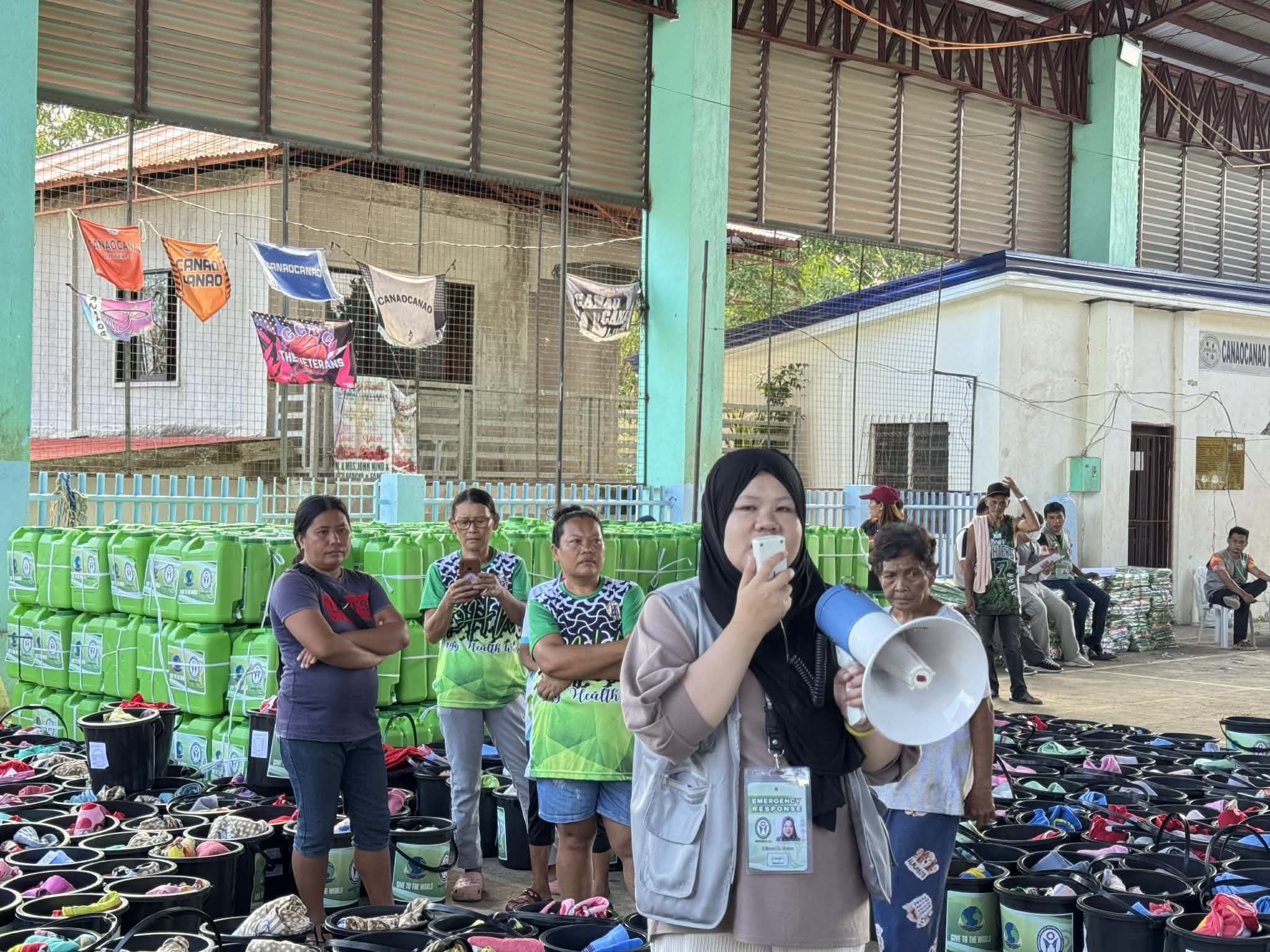
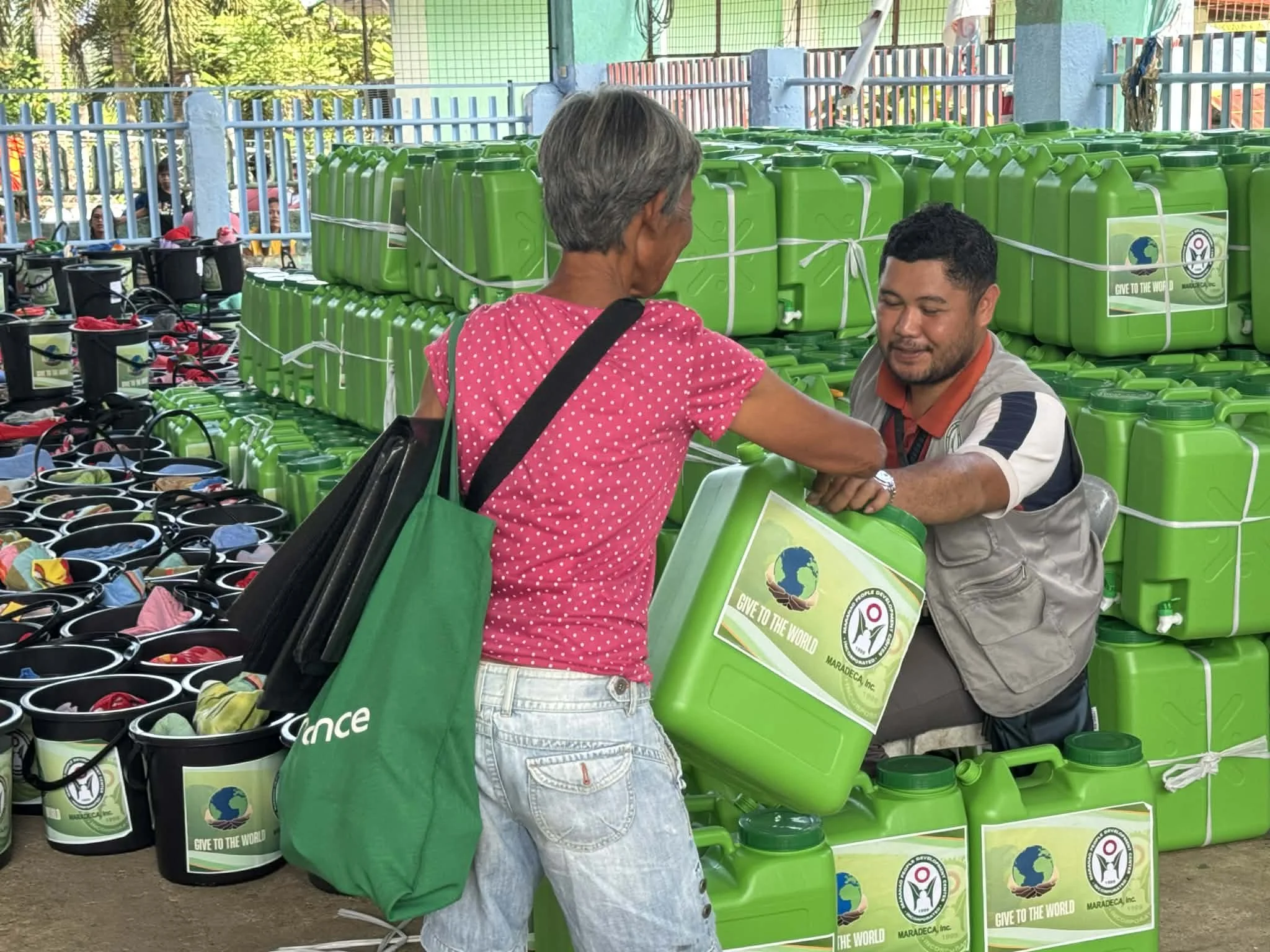
After Typhoon Tino, the relief kits were planned with spoon-and-fork sets. When the team met the families, they asked for underwear instead. MARADECA changed the kits. As the team put it, rather than follow the procurement list, they listened to what households said they needed most.
From a farmer in the flood-recovery program: "With the vegetables we grow, we no longer need to buy food. We even have enough to sell or share with neighbors."
What your gift can help with future projects in 2027 for the Philippines
Climate-resilient farming kits, with seeds, fertilizer and tools
A community workshop on climate-resilient farming
Shelter repair, kitchenware and water storage
Training and equipping a local emergency response team
A six-month recovery program for a whole barangay (village)
Jordan
Za'atari is home to about 50,000 Syrian refugees, and roughly a quarter are women of childbearing age. By the end of August, most organizations had stopped or sharply cut health services in the camp. Medicines for chronic disease are short, so are iron supplements and routine lab tests for pregnant women. SAMS is still providing every service it can, with patient numbers rising. In SAMS's words, this funding "comes at a particularly critical time."
Our recent impact
2025
3,886 people received mental health care, 58% of them women.
As other providers closed, referrals to SAMS rose by about 40%; SAMS is now the only specialized mental health provider in northern and southern Jordan.
2026 so far
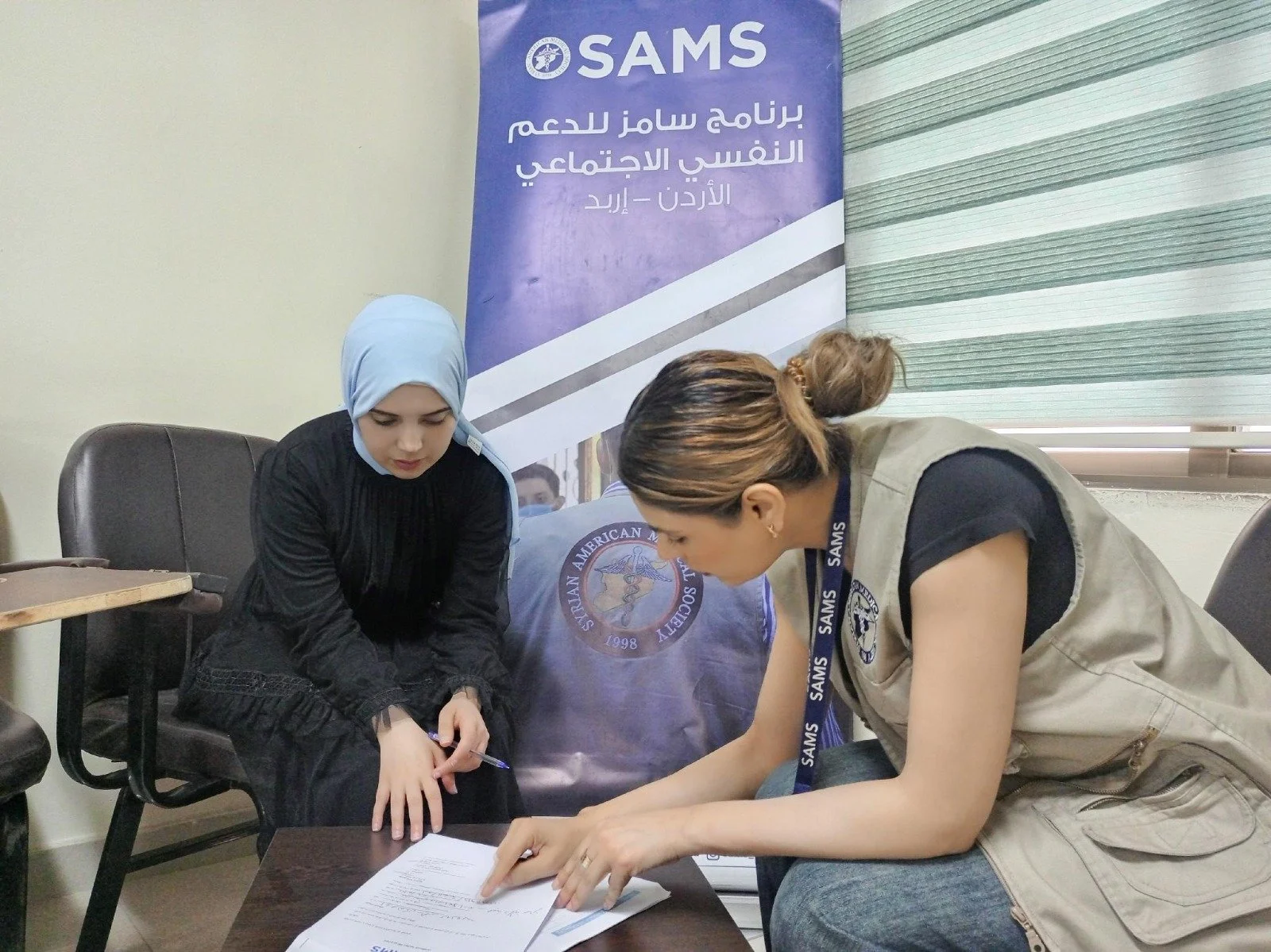
2,345 people reached from January to June, 57% women, under program for therapy, family support and suicide and substance-abuse prevention.
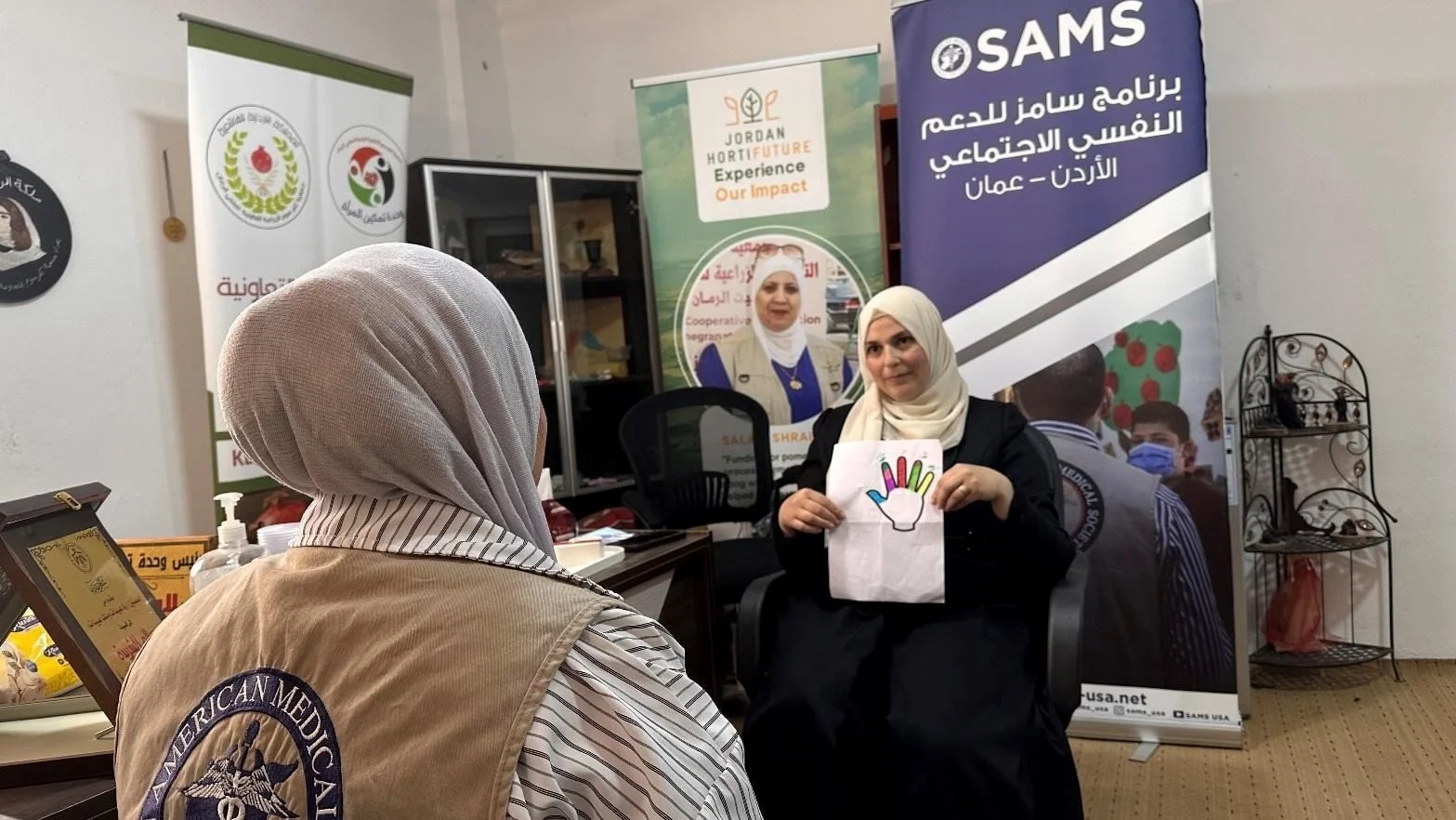
Syrian American Medical Society (SAMS) is our partner on the ground in Jordan, where mothers and babies take refugee in Za’atari camp, as other clinics close.
A story shared from the field
Mrs. A.Q., 50, lost her husband and her home. In the camp she struggled with grief, anxiety and isolation. Through a SAMS family support program she learned ways to manage stress, and found comfort in knitting and bead embroidery. Then she started teaching it. Today she leads a small circle where displaced women learn the craft and talk through what they carry. Her view: healing means more when it is shared.
What your gift can help with future projects in 2027 for Jordan
“Nurturing Mothers, Supporting Minds” a maternal and child health unit to SAMS’ Za’atari clinic, led by a licensed midwife, with a mental health care built in.
This unit would help women receive antenatal and postnatal care, vaccinations, breastfeeding support and family planning.
Women would receive one-to-one mental health care.
Mothers and caregivers can join support groups and awareness sessions.
Ukraine
Our partners are supplied through the IDA Foundation, a nonprofit medical supplier, whom we have been working with since 2016, to help individuals and families.
Kharkiv sits 30 to 40 kilometers from the Russian border and lives with air-raid alerts and missile and drone attacks. People keep arriving from towns where their homes were destroyed. Many are elderly, disabled or chronically ill, and cannot afford their medicines. Hospitals and military medical units in the Kharkiv, Donetsk and Sumy regions treat hundreds of wounded soldiers and civilians every month and run short of supplies.
Our recent impact
Give to the World bought medicines from the IDA Foundation, and flew them to Kharkiv: 45 boxes, about 580 kilograms.
The regions distributed almost all of it as soon as it arrived.
Medicines were received at field surgical hospitals and military medical units treating wounded soldiers and civilians.
A story shared from the field, in the partner’s words
"Your medications did not remain in storage. They went directly to people. We did not have to spend time looking for people who needed them; requests were already waiting for us."
"When a military medic tells us, 'Thank you. We really need this,' we always think about you, our friends across the ocean who made this assistance possible."
The people who come fall into two groups: Families caring for a parent or spouse who is seriously ill, and people who lost their homes to the fighting and arrived with almost nothing.
What your gift can help with future projects in 2027 for Ukraine
The same route as in 2026: shipments of IDA medicines to Kharkiv
Medicines for: heart conditions and blood pressure, pain and fever relief, cold and flu treatments, allergy and stomach medicines.
Other partners you can support
-
Colombia
In La Guajira, many Wayúu communities live without electricity, so the day ends at sunset. Since 2021, Give to the World and Tierra Grata have brought solar energy, safe water and sanitation to more than 1,200 people there. In 2025, Project Noche Grata installed 76 community solar streetlights in 9 communities, and each community elected a “Guardian of the Light” to keep them running.
-
Kenya
In Kenya’s informal settlements, fewer than 15% of students who finish grade 8 go on to secondary school. For 25 years, CFK Africa has helped young people in Kibera stay in school and grow into leaders. With Give to the World’s support, it runs study camps during school breaks, mentorship and leadership sessions, and one-on-one guidance throughout the year.
Donate now to help these upcoming projects
Donate by check
Give to the World
PO Box 6183
Arlington, VA
22206-0183